Why We Never Lay Solid Wood the Day It Arrives

Why We Never Lay Solid Wood the Day It Arrives

Key Takeaways for Homeowners & Contractors

  • Delivery day is never install day: Rushing installation guarantees future structural failures.
  • 3 to 7 Days On-Site Acclimatization: Boards must balance with ambient room humidity.
  • The 2–3% Moisture Differential Rule: Installation only proceeds when wood and concrete moisture align.
  • Second 14 to 21-Day Rest Period: Floors settle post-install before heavy sanding and varnishing.
  • Malaysian Climate Reality: >94% peak relative humidity causes raw timber to swell rapidly.

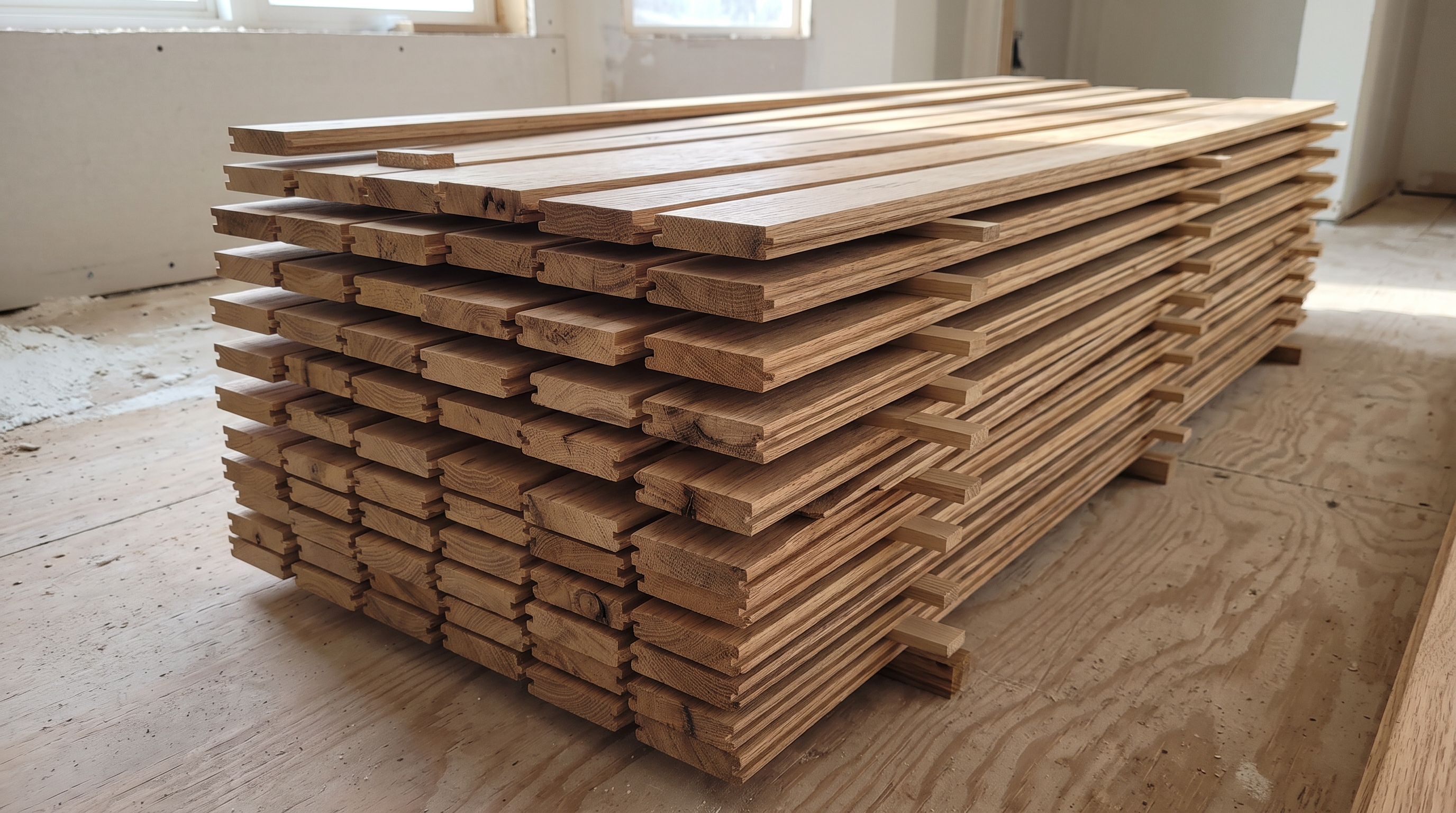
The lorry pulls up, the wood comes off, and everyone wants the floor down by the weekend. We get it. But if we started installing that same afternoon, we'd be setting you up for trouble.

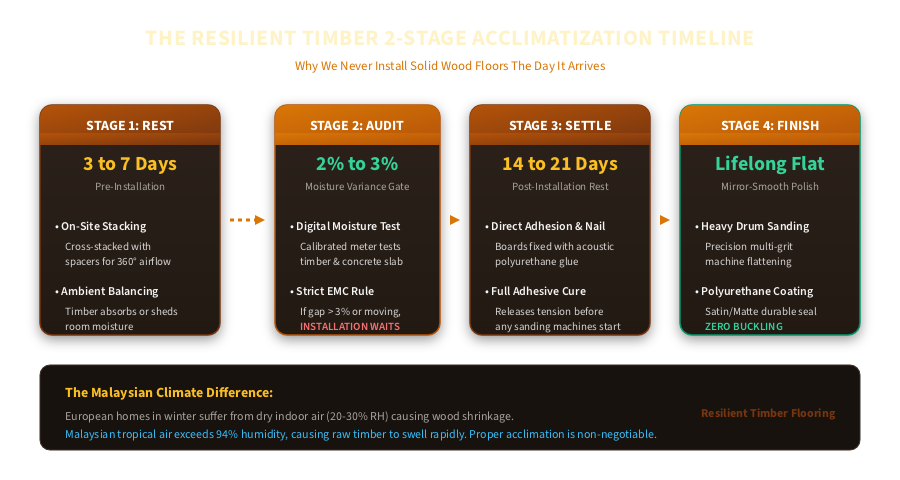
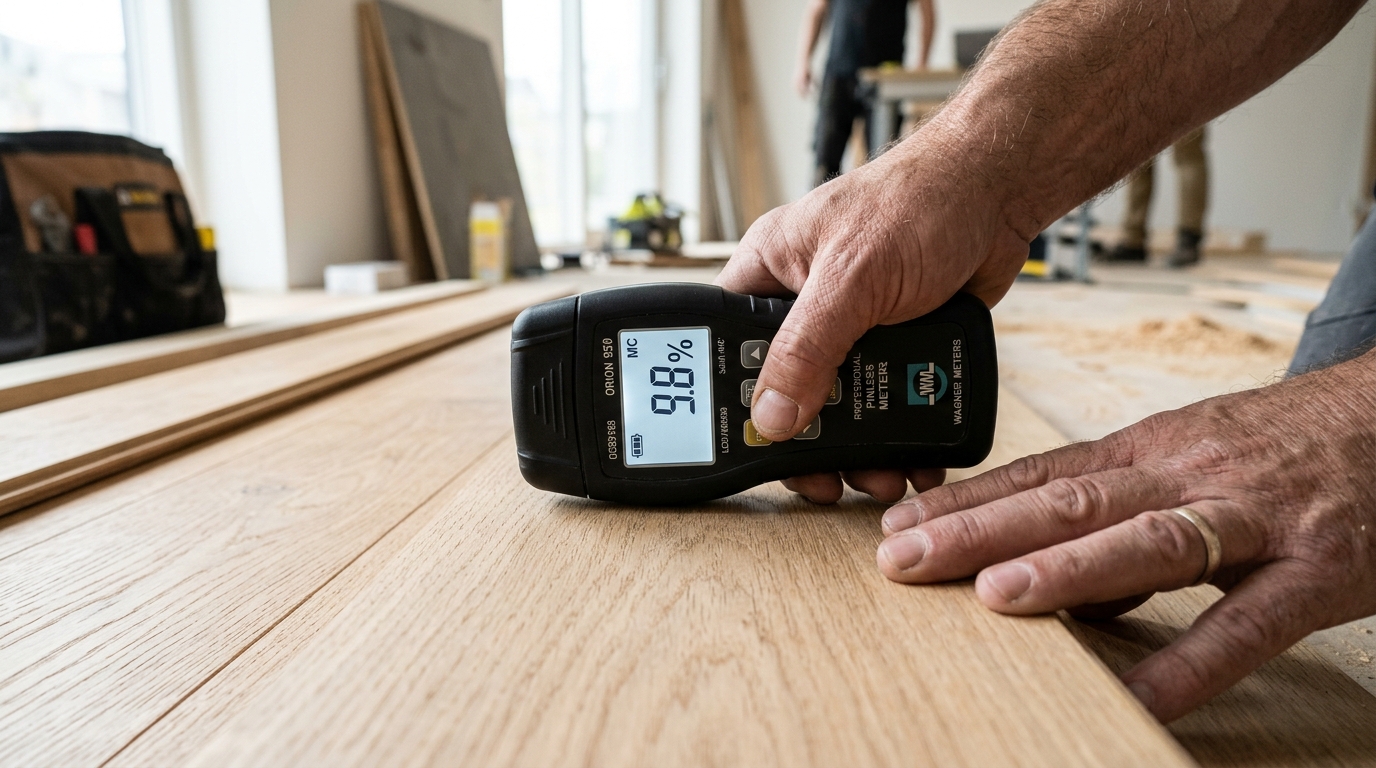
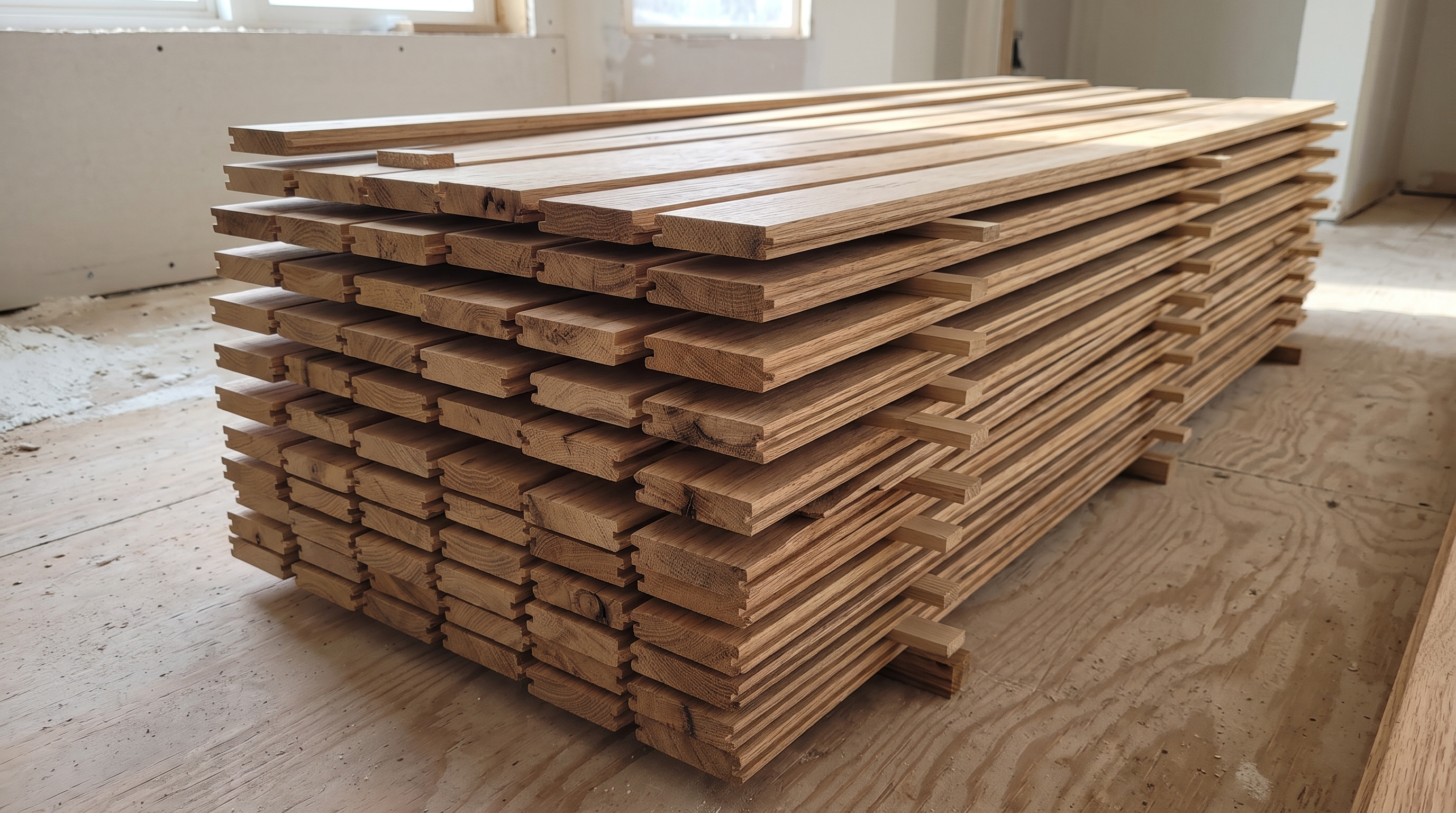
Here's how we actually do it. Delivered wood sits on site for 3 to 7 days first. We check it with a moisture meter before a single board goes down. And once the floor is in, we leave it alone for another 14 to 21 days before any grinding starts.

That sounds like a lot of waiting around. It is. It's also the difference between a floor that stays flat for years and one that starts lifting, curling or opening up a few months in.
So what is acclimatization, exactly?

So what is acclimatization, exactly?

Put simply, it's giving the wood time to get used to the room it's going to live in.

Solid wood was a tree once, and it still behaves a bit like one. It soaks up moisture when the air is damp and gives it back when the air is dry. More moisture means the boards swell a little. Less means they shrink.

The wood that turns up at your house was cut, dried and stored somewhere else, in different air. Until it settles into your room's conditions, every board is still quietly moving. We'd much rather that movement happens while the boards are stacked loose on the floor, and not after they've been glued and nailed in place.

What happens if you skip it

What happens if you skip it

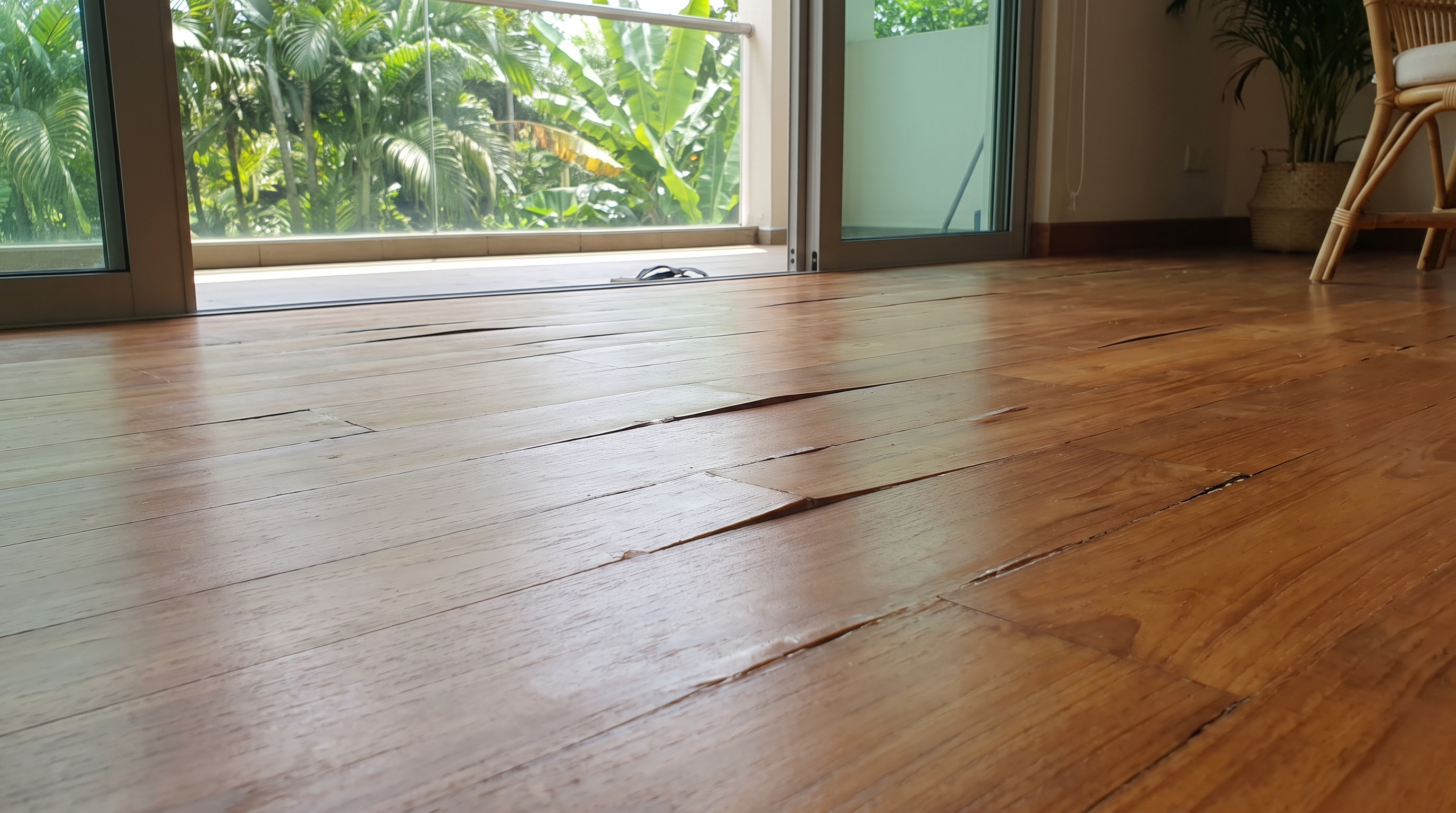
If the wood goes down before it's settled, it keeps moving anyway. The difference is that now it's fixed in place and has nowhere to go. That's when you start seeing problems.

Problem What it looks like What's going on underneath
Buckling Parts of the floor lift up into unsightly humps and break off the subfloor. The boards absorb room moisture post-install, swell laterally, run out of room, and buckle upwards.
Warping & Cupping Single boards curl, edges raise higher than centers, or boards twist. One side of the board takes in or loses moisture faster than the other (e.g. subfloor moisture).
Gaps Wide spaces open up between boards, collecting dust and dirt. The boards dry out and shrink after installation under air-conditioning.
The Cost of Haste: None of these fixes are cheap. A buckled or warped floor usually requires ripping out boards, removing cured adhesive, and relaying. A few days of patience at the start costs nothing by comparison.
Two rounds of waiting: Before and After

Two rounds of waiting: Before and After

Most people only expect one wait, before the floor goes in. In rigorous timber craftsmanship, there are actually two mandatory waiting periods:

Stage Duration Why It Is Essential
1. Before Installation 3 to 7 days on site The delivered wood sits stacked in the room so each board adjusts to ambient air and temperature.
2. After Installation 14 to 21 days The new floor settles, adhesive cures completely, and internal stresses dissipate before machine grinding starts.

The first wait is for the individual boards. The second is for the floor as a cohesive unit, glue included. We want to be grinding, sanding, and varnishing a floor that has completely stopped moving, not one that is still finding its feet.

Why we don't just count the days: The 2–3% Moisture Rule

Why we don't just count the days: The 2–3% Moisture Rule

Those day ranges are a helpful guide, but wood doesn't care what the calendar says. It is ready when its internal moisture content has stopped fluctuating and matches the room—what specialists call the Equilibrium Moisture Content (EMC).

Before we install, we take precision moisture meter readings on the timber and on the concrete subfloor underneath:

This scientific verification explains why two different projects using the exact same timber species can be ready on different days.

Why it matters even more here in Malaysia

Anyone who lives in Malaysia knows the air is rarely dry. On top of that, we swing between monsoon wet months and dry periods every year. Wood that hasn't stabilized before it is laid will react to every single one of those swings.

Factor Heated European Home (Winter) Malaysian Tropical Climate
The Air Heating drags indoor humidity down to 20–40%. Average daily maximum humidity exceeds 94% (MetMalaysia).
Where Wood Settles Low, around 6–8% moisture content. High, around 13–18% moisture content.
What Wood Does Dries out and shrinks. Absorbs ambient humidity and swells.
Common Failure Gaps and cracks when air stays excessively dry. Buckling and warping as planks expand against walls and each other.
How a Resilient Timber Flooring Project Runs

How a Resilient Timber Flooring Project Runs

When you engage Resilient Resources, here is the rigorous process your floor goes through:

  1. Delivered on Site: Solid wood is delivered and stacked neatly in the designated room.
  2. Room Acclimatization: Left to settle, typically for 3 to 7 days.
  3. Precision Moisture Check: We test the timber and concrete subfloor with digital meters.
  4. Clean Installation: We only install once readings are within 2–3% and stable day-to-day.
  5. Post-Installation Rest: The installed floor rests undisturbed for 14 to 21 days.
  6. Grinding & Finishing: We grind, fine-sand, and finish with high-grade protective coatings.

Frequently Asked Questions

Answers to common questions regarding timber acclimatization, air-conditioning, and drying periods in Malaysia.

Typically 3 to 7 days on-site prior to installation. However, actual readiness is dictated by digital moisture meter readings (EMC), not the calendar alone.

Yes! In fact, the wood should adjust to the room's everyday living conditions. If the room will be air-conditioned daily, running the AC intermittently during the acclimatization days ensures the wood stabilizes to real-world humidity.

Skipping acclimatization frequently results in severe floor buckling (boards pushing up into humps), edge cupping, or wide gaps between planks as weather seasons shift. Rectifying these issues usually requires tearing out and replacing entire floor sections.

The moisture content variance between the wood planks and the concrete subfloor should not exceed 2% to 3%. Installing over a damp concrete slab drives vapor into the underside of the wood planks, causing immediate cupping.

Flooring adhesives introduce moisture and mechanical tension. Resting the floor for 2 to 3 weeks allows the adhesive to cure fully and any micro-movements to cease, ensuring the floor stays dead flat after grinding.

Why We Never Lay Solid Wood the Day It Arrives

Thinking about a solid wood floor?

A few extra days at the start buys you years of a floor that stays perfectly in place. If you are planning timber flooring for your home, office, or hall, contact us before the wood is delivered so we can factor acclimatization into your renovation timeline from day one.